


Innovating with CO2: HighChem and the World’s First Paraxylene Project – Key Persons Roundtable
~ Integrating into Sports Uniform Materials! ~
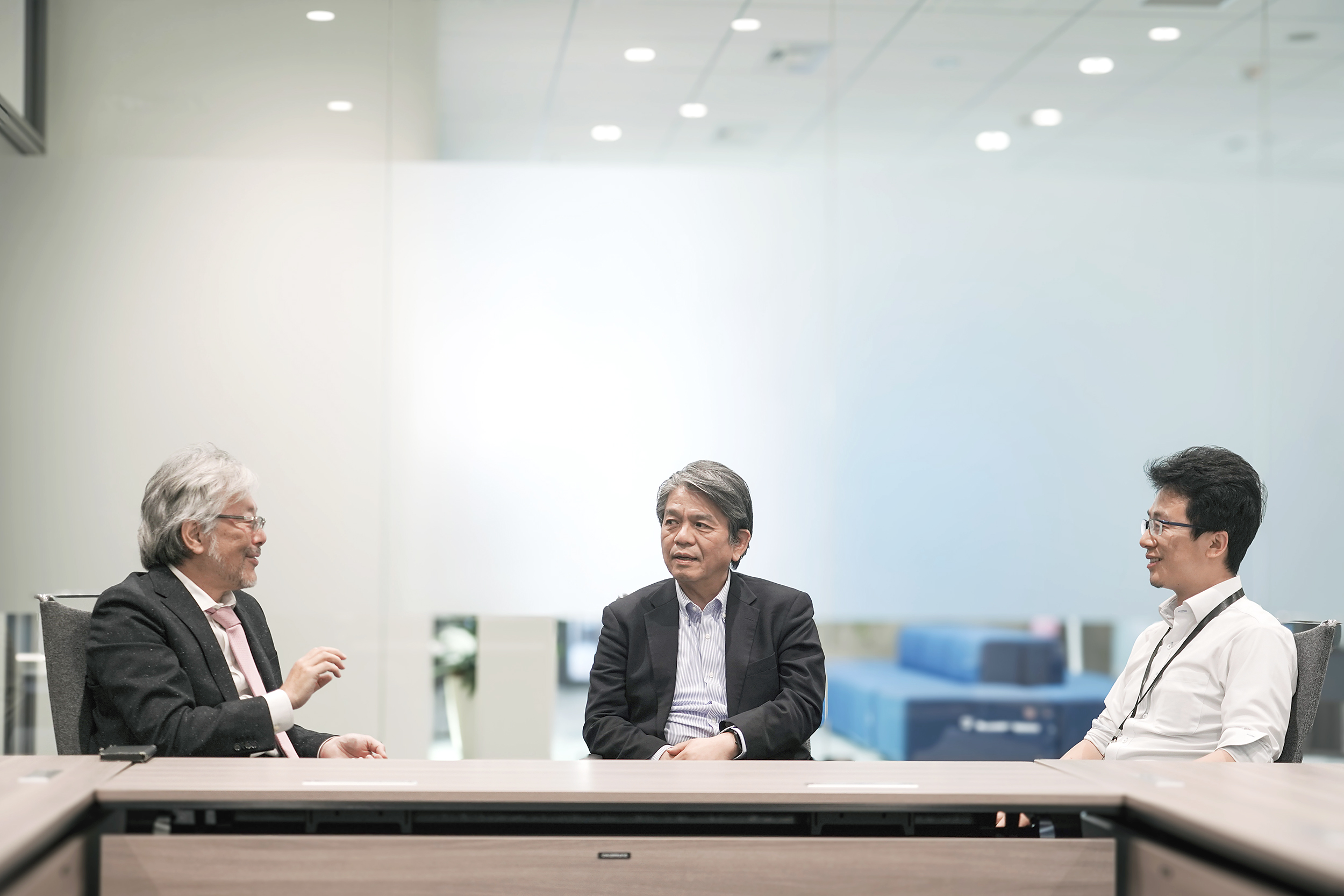
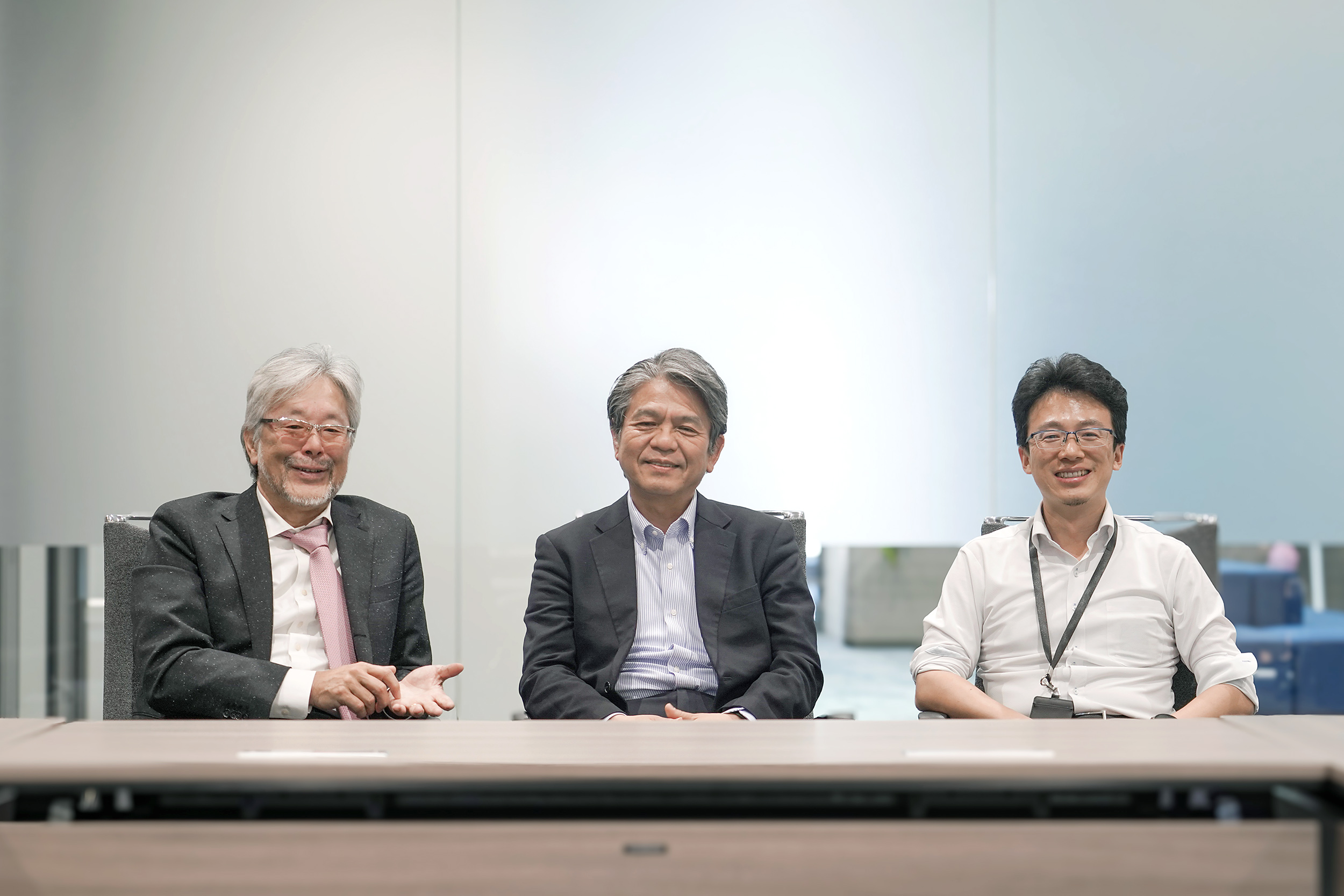 From left: Mr. Hideaki Konishi, General Manager of the C1 Chemicals Division; Mr. Takayuki Aoshima, Director of the HighChem Tokyo Research Institute; and Mr.
Qipeng
Dai
, Manager of the Carbon Innovation Section.
From left: Mr. Hideaki Konishi, General Manager of the C1 Chemicals Division; Mr. Takayuki Aoshima, Director of the HighChem Tokyo Research Institute; and Mr.
Qipeng
Dai
, Manager of the Carbon Innovation Section.
HighChem has been a key participant in the development of CO2-derived paraxylene since 2020, collaborating with the University of Toyama, Chiyoda Corporation, Nippon Steel Engineering, Nippon Steel Corporation, and Mitsubishi Corporation. This project is a national endeavor under NEDO (New Energy and Industrial Technology Development Organization), a Japanese governmental agency. HighChem's contributions have focused on catalyst development and the scaling up of production processes.
Today, we delve into the latest developments of this project and HighChem's role in advancing decarbonization technologies through a roundtable discussion with Mr. Konishi, Head of HighChem's C1 Chemical Division, Mr. Aoshima, Director of HighChem Tokyo Research Institute and Mr. Dai, Project Manager overseeing the paraxylene project. They provide insights into the latest developments and HighChem’s pivotal role in advancing decarbonization technologies.
──Could you tell us how HighChem came to participate in this development project involving CO₂-derived paraxylene, which was also used in the recent sports uniforms?
Mr. Dai: First, HighChem established a production technology for ethylene glycol, a raw material for PET (polyethylene terephthalate), from synthesis gas. We successfully licensed this technology for annual production of 10 million tons in China, turning lab-scale technology into commercial-scale reality.
Building on that, we have conducted joint research with Professor Tsubaki of Toyama University—an authority in C1 technology—on producing various chemicals from synthesis gas. One such project was developing technology to produce paraxylene from synthesis gas.
As development progressed, global momentum for decarbonization increased, and major companies began expressing interest in modifying raw materials to CO₂ using similar catalytic concepts.
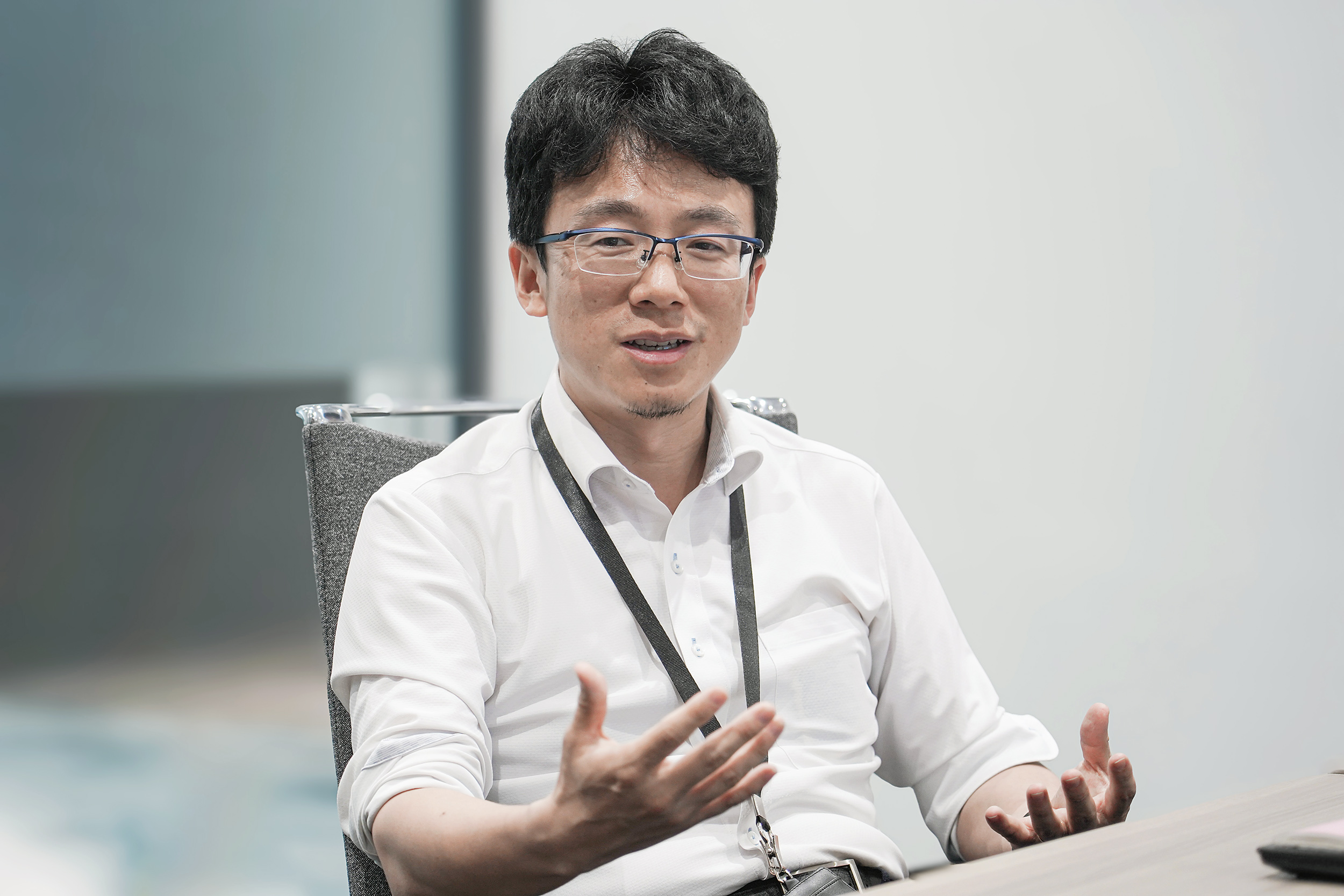 Mr. Dai: “We’ve set a major goal—or concept—to become the only company in the world that can produce PET without using petroleum.”
Paraxylene is a raw material for PET, which is used in bottles and textiles. As for ethylene glycol (EG), the other raw material for PET, HighChem has already succeeded in mass-producing a CO-derived version in China and is also working on a CO₂-derived version.
With both of these raw materials, PET—which is produced at a volume of about 80 million tons globally—can be made entirely from CO₂. This led to the ambitious concept of HighChem becoming the world’s only company capable of making PET without petroleum.
Mr. Konishi: The reason HighChem was able to join this project alongside many major corporations lies in the fact that we revived an old but forgotten Japanese technology—producing ethylene glycol from synthesis gas derived from carbon monoxide. We established it as a new commercial technology and succeeded in scaling it up to mass production. That achievement was recognized.
There are plenty of technologies that work in laboratories, but most of them fail to reach the mass production stage. HighChem succeeded in doing just that—and in the massive Chinese market, no less. In fact, I was drawn to HighChem because of that success, so I understand the appeal very well (laughs).
Mr. Aoshima: I joined HighChem in April of this year, and I truly sense the company’s strength in how it commercialized the SEG® catalyst at the Tokyo and Nantong research centers in less than ten years, growing the business to such a large scale. I expect that same expertise will greatly contribute to this project.
Mr. Konishi: Another major reason is that HighChem has access to China, the largest market for paraxylene and ethylene glycol. Ultimately, the purpose of technology development is commercialization, and it must be pursued where the demand exists. China is currently the largest producer of PET and the biggest consumer of paraxylene. I believe HighChem attracted attention because it can bridge technology and the demand market in China.
──Could you reiterate HighChem’s role in the development of paraxylene derived from CO₂?
Mr. Dai: From the launch of the project, HighChem’s role has been the development of catalyst industrialization technology, starting with catalyst development. In short, our task is to develop a process for mass-producing the catalyst and scaling it up for industrial use.
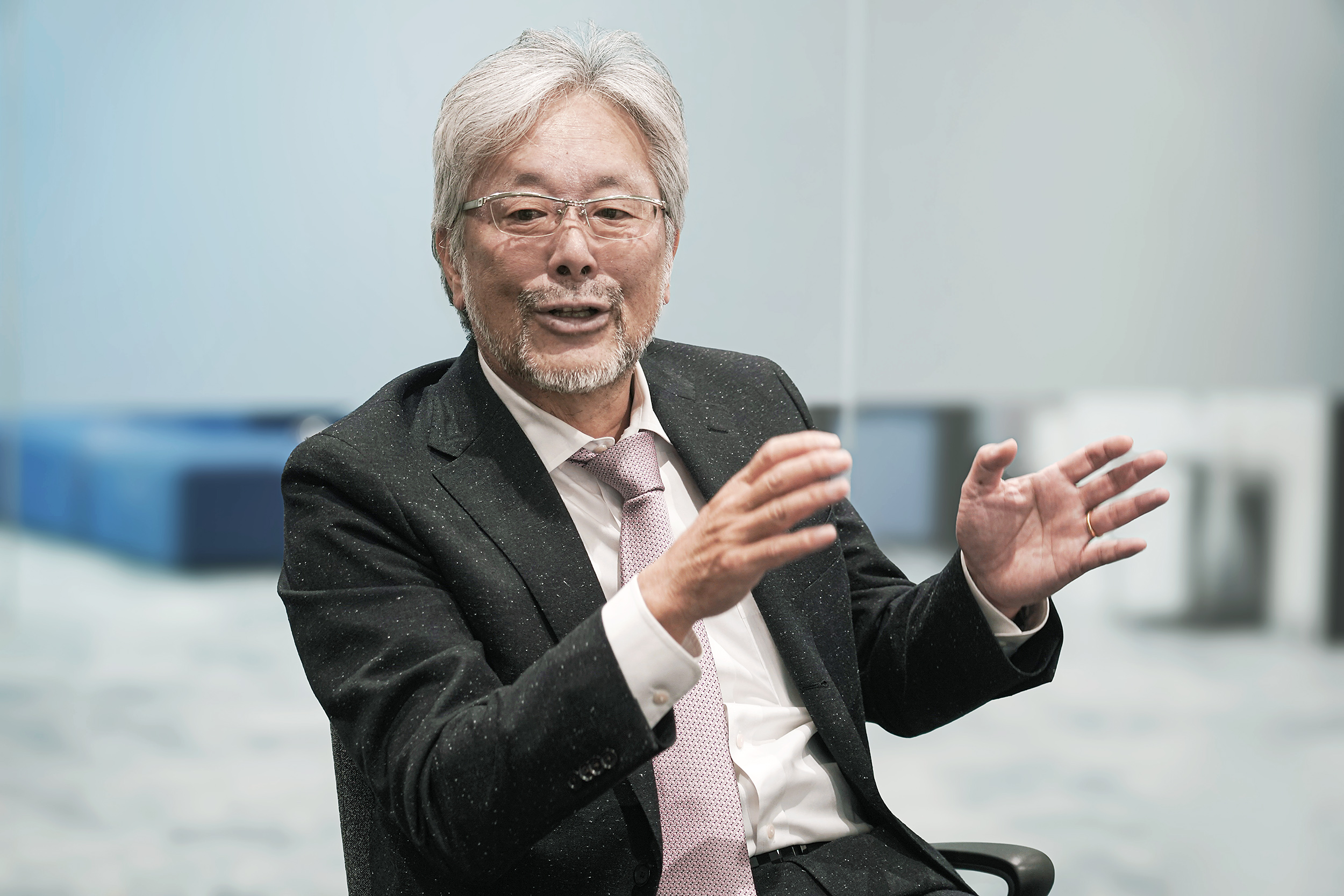 Mr. Konishi: “Developing catalysts is like making fried rice—you can’t just scale it up in a big pot and expect it to turn out the same.”
Mr. Konishi: Catalysts are often compared to fried rice (laughs).
Even if you have the secret sauce and a famous chef’s recipe, it won’t necessarily taste the same when someone else tries to make it. It’s the same with catalysts—what works perfectly in a lab can be hard to replicate in a large-scale setting. To industrialize it, we must turn the “secret recipe” into one that can be mass-produced, consistently delivering the same quality that everyone can recognize and say, “Yes, that’s it.” And it has to be repeatable every single time. Like fried rice, it’s incredibly difficult.
Mr. Aoshima: Exactly. On top of that, it’s essential to develop technology that designs the shape of the catalyst to fit the process. And that’s something only a company can do. HighChem has experience in scaling up ethylene glycol production, and possessing that kind of know-how is a major strength.
──The development of CO₂-derived paraxylene technology is currently underway toward mass production. How far along is the process now?
Mr. Dai: The NEDO project started in 2020, and in March 2023, we succeeded in isolating paraxylene from CO₂ using Chiyoda Corporation’s pilot plant. That paraxylene has now been adopted for use in sportswear. The project ultimately aims for commercialization around 2030.
Mr. Aoshima: A common issue in decarbonization technologies is the procurement of CO₂ and hydrogen. While this remains a challenge for now, I believe the situation will be very different around 2035 or 2040. At that time, the key will be whether we already possess the technology. Instead of scrambling to develop it then, having it ready now is the smarter strategy.
──Thank you very much. Could you also tell us about the progress of other decarbonization technologies that HighChem is currently working on?
Mr. Konishi: Regarding ethylene glycol derived from CO₂, we are currently developing it as “Green MEG,” and are actively working toward commercialization. We’re working hard to ensure that it can be produced at locations and scales that make it cost-competitive with commercially available ethylene glycol.
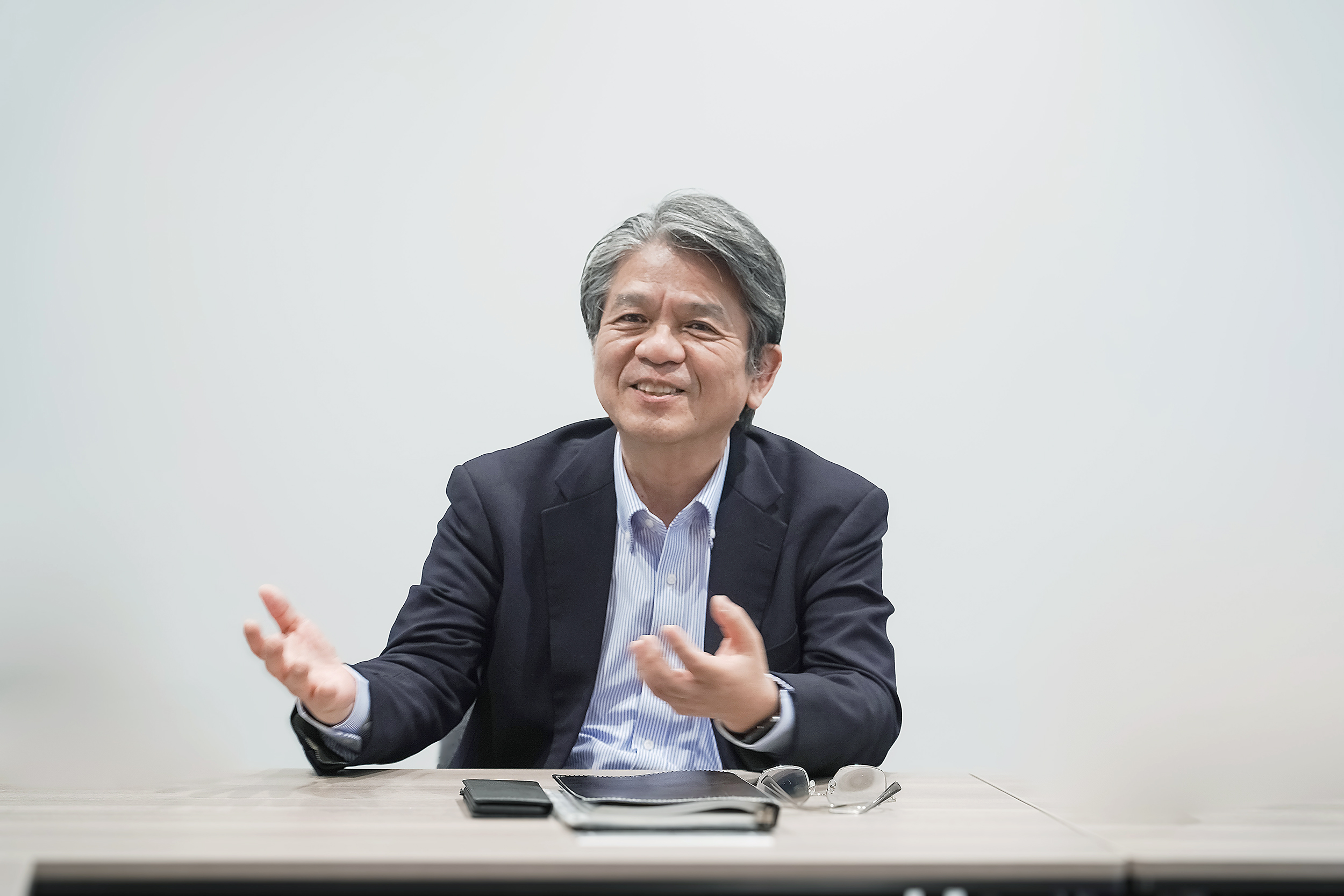 Mr. Aoshima: “What the world will demand going forward is how quickly we can achieve commercialization and practical application, just as HighChem has already demonstrated.”
Mr. Aoshima: Beyond this project, we’re also working on biomass-derived plastics. Recently, we established a joint research lab with Hokkaido University. While these biomass utilization technologies are progressing, there are still many hurdles to overcome, and widespread adoption has yet to be achieved.
What will be required globally moving forward is the ability to leverage networks of markets and production bases—just as HighChem has done—and rapidly push for commercialization and practical applications.
Mr. Konishi: In that sense, we want to continue building strong track records—especially in the environmental sector—so that potential partners can view collaboration with HighChem as a direct path to practical and commercial realization.